PoCo site visit: Bonnefanten Museum, Maastricht
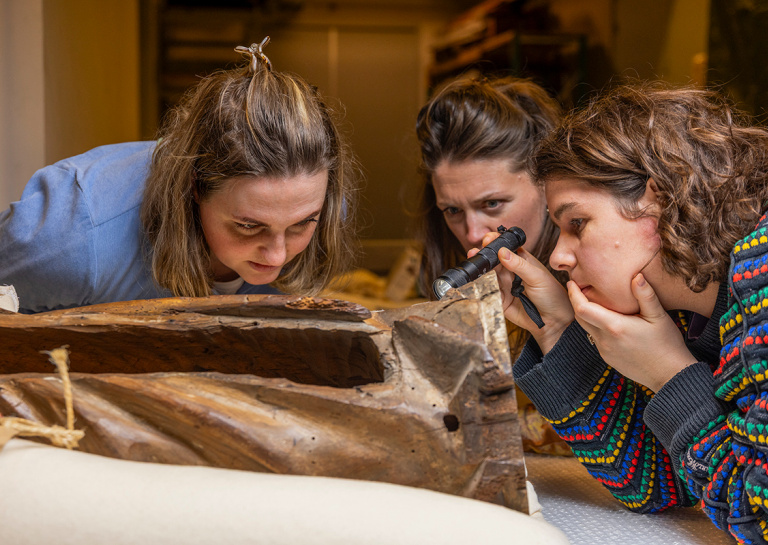
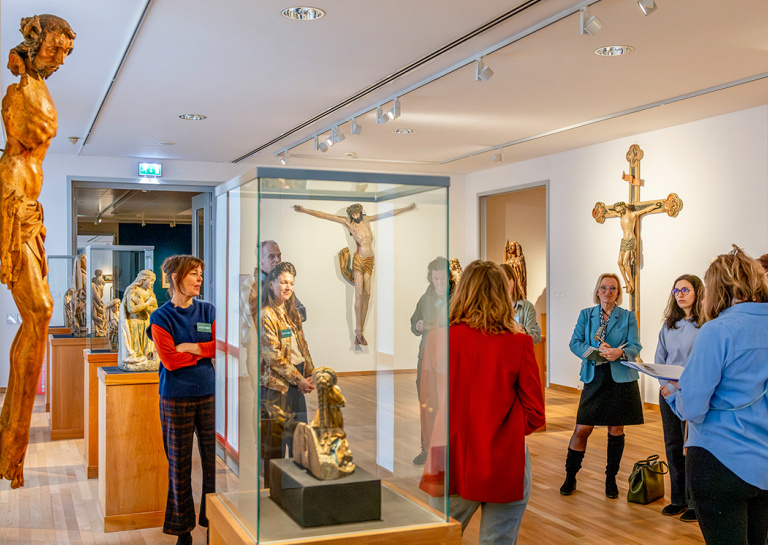
On 17 March, PoCo paid a visit to the Bonnefantenmuseum. Jip van Reijen gave an introduction to the museum and its collection during a joint tour of the sculptures in the gallery. Throughout the day, a wide range of perspectives, techniques and discussions were explored. This was already evident during the introduction, where various themes were discussed in relation to different sculptures. During a visit to SRAL’s polychromy studio, several points of discussion regarding Jan van Steffesweert’s ‘Kruishout’ were also raised.
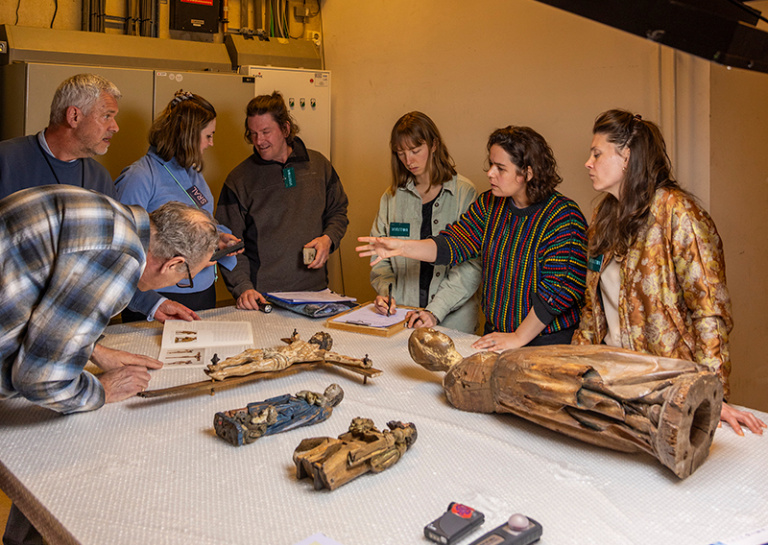
The second half of the day was devoted to the examination of sculptures in the depot. As the vast majority of the collection has already been examined by Arnold Truyen, a conscious decision was made to select sculptures that had not yet been studied. Two sculptures were examined using a digital microscope: a dressed Madonna and a basket with an angel of the Annunciation from Vrijthof 30, Maastricht. This preliminary research may assist in making decisions regarding further investigation, implementing conservation measures and/or carrying out restoration work.
Photographer: Rob Becker.
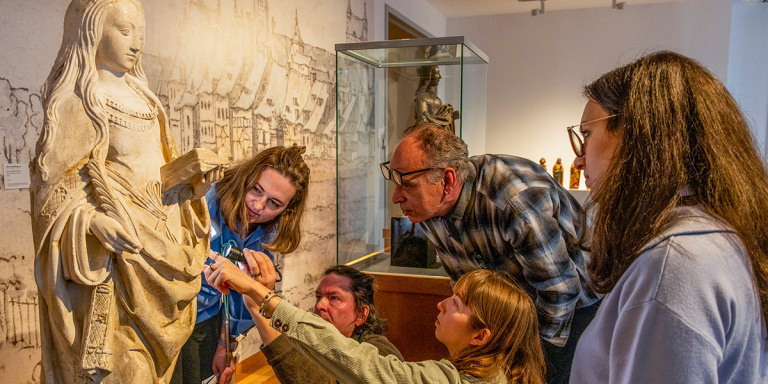
Lively discussion
During the visit, many questions were raised and discussed: the attribution to a sculptor (or their workshop); signatures on Van Steffesweert’s sculptures and apostle figurines; in the case of the Cologne Madonna, the importance of preventive conservation was discussed. Regarding Jan van Steffesweert’s crucifix, the topics of overpainting, reuse and miniature reconstruction using 3D printing were addressed. During the visit to the SRAL, Jan van Steffesweert’s crucifix was discussed, including the question of whether or not to preserve physical evidence by leaving the stratigraphic research on the sculpture visible. Here too, the decision depends on the focus of which part of the object’s story is to be told. Which part of the story and the history of the object will be shown? Is it justifiable to completely remove physical traces of an object’s history if dissociation from (digital) documentation can take place at a later stage? What solutions might there be for sculptures that take into account didactic, art-historical, conservation, aesthetic and theological factors?
The visit made it clear that there is plenty to investigate and that polychromy is certainly not a static subject. Thanks to the Bonnefanten Museum and other participants for their contribution to this day.